This project aims to protect some of Ireland's most threatened marine species while supporting the long-term sustainability of local inshore fisheries. The waters off Ireland's southwest coast provide important habitat for critically endangered species including Angel Shark, White Skate, Flapper Skate and Blue Skate, all of which face ongoing risks from accidental capture in fishing gear.
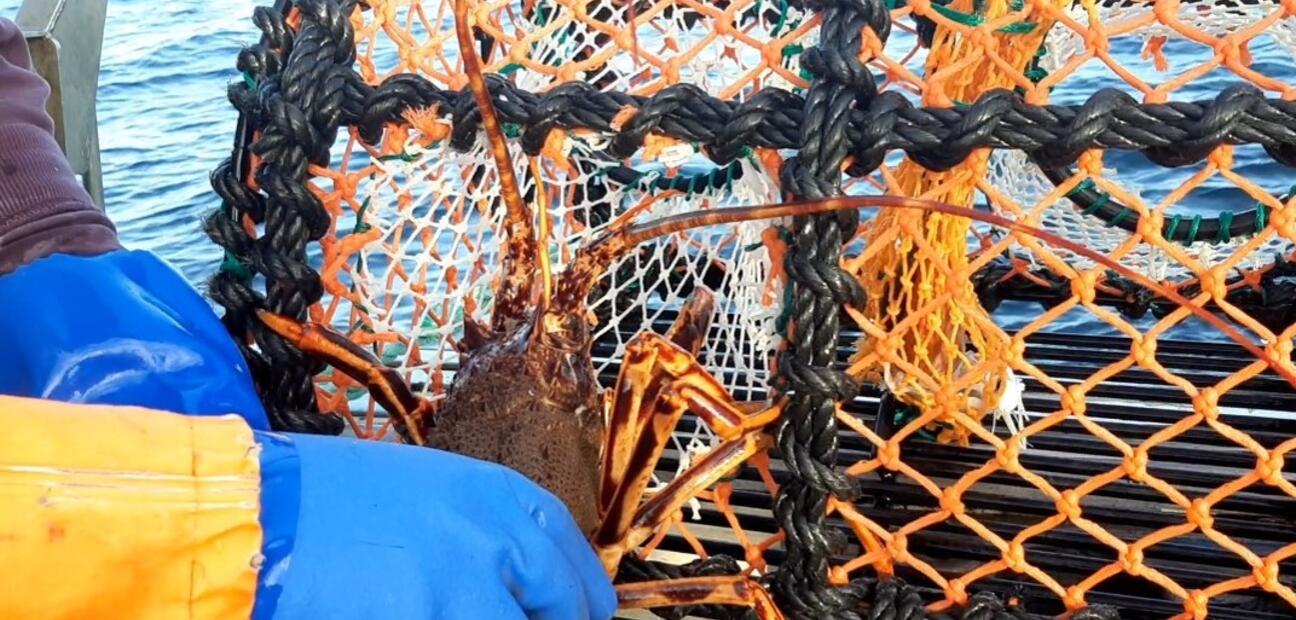
Research has shown that bycatch in large-mesh tangle nets used to target European spiny lobster (crayfish) is a significant source of mortality for these species. The fishery can also interact with protected marine mammals, including grey seals and harbour porpoises.
The project brings together scientists, fishers and research partners to:
- Improve understanding of bycatch and wildlife interactions in inshore fisheries.
- Assess the status, distribution and habitat use of European spiny lobster through tagging and monitoring programmes.
- Develop practical measures to reduce or eliminate bycatch of endangered and protected species.
- Trial low-impact fishing methods, including innovative pot designs, as alternatives to static net fisheries.
- Investigate solutions to reduce seal interactions with fishing gear and minimise economic losses to fishers.
- Track the movements and habitat use of endangered skate and shark species using acoustic tagging technologies.
- Develop non-invasive monitoring techniques, including Baited Remote Underwater Video (BRUV) surveys.
- Support the development of a long-term management plan that balances marine biodiversity conservation with sustainable fishing opportunities.
The project will provide the scientific evidence needed to improve fisheries management, restore vulnerable crayfish stocks, reduce impacts on protected species, and safeguard biodiversity in Ireland's southwest coastal waters. By working directly with fishing communities, the project aims to deliver practical conservation solutions that support both healthy marine ecosystems and viable coastal fisheries.
This project will deliver significant benefits for marine biodiversity, sustainable fisheries, and coastal communities along Ireland's southwest coast.
- Protecting Endangered and Protected Species
The project will provide the scientific evidence needed to protect critically endangered Angel Shark, White Skate, Blue Skate and Flapper Skate populations in Irish waters. By identifying areas of highest risk and developing measures to reduce bycatch, the project will help support the recovery of these species. It will also reduce accidental capture of protected marine mammals, including grey seals and harbour porpoises.
- Supporting Sustainable Fisheries
A comprehensive assessment of European spiny lobster (crayfish) stocks will provide the foundation for future management and stock recovery. Through tagging studies, habitat assessments and fishery monitoring, the project will help secure the long-term sustainability of this valuable fishery and support local coastal economies.
- Developing Low-Impact Fishing Methods
Working directly with fishers, the project will trial innovative and environmentally friendly fishing methods that reduce impacts on sensitive species and habitats. These trials will help demonstrate practical alternatives to traditional fishing practices while maintaining viable fishing opportunities for coastal communities.
- Improving Fisheries Management
Enhanced fisheries data, monitoring technologies and species tracking programmes will strengthen the evidence base for future management decisions. Research findings will be incorporated into a long-term crayfish management plan and broader fisheries conservation measures.
- Strengthening Collaboration and Knowledge Sharing
The project will bring together fishers, scientists, and industry stakeholders to develop practical, evidence-based solutions.
- Delivering Wider Environmental Benefits
By reducing bycatch, supporting stock recovery and promoting low-impact fishing practices, the project will contribute to healthy marine ecosystems and help ensure compliance with national and EU conservation and fisheries objectives, including the Habitats Directive, Marine Strategy Framework Directive, EU Biodiversity Strategy and the Common Fisheries Policy.
This project will run from 2021 to 2027
The project will deliver a range of scientific, technical and management outputs to support marine conservation and sustainable fisheries management in Ireland's southwest coastal waters.
1.Fisheries Data and Bycatch Monitoring
Comprehensive datasets and reports will be produced on the distribution of fishing effort, catch composition, and interactions between fisheries and protected species. This will include spatial mapping of bycatch hotspots, crayfish catches across different habitats, tag recovery data, and assessments of economic losses associated with seal depredation.
2. Crayfish Stock Assessment
The project will deliver the first detailed assessment of crayfish stocks across the study area. Outputs will include stock status reports, population estimates, and maps showing the distribution and use of reef habitats by crayfish, providing the foundation for future management measures.
3. Low-Impact Fishing Innovations
Trials of alternative fishing gears will result in the development and optimisation of low-impact fishing methods for crayfish. The project will also establish catch-rate indicators linked to stock status, helping to inform sustainable fishing practices and future fisheries management.
4. Solutions for Seal-Fishery Interactions
The project will test and evaluate technologies designed to reduce seal interactions with fishing gear. Outputs will include assessments of their effectiveness and the development of alternative trap-based fishing methods for whitefish species, reducing dependence on static nets.
5. Monitoring Endangered Species
Research will generate new information on the distribution, movements, habitat use and conservation status of critically endangered sharks and skates. Reports, datasets and mapping products will support conservation planning and evaluate the effectiveness of management measures introduced during the project.
6. Non-Invasive Monitoring Techniques
Baited Remote Underwater Video (BRUV) surveys will be developed and tested as a non-invasive method for monitoring endangered elasmobranch species and other key marine fauna. This will help establish cost-effective monitoring approaches for future conservation programmes.
7. Fisheries Management and Stakeholder Engagement
The project will produce a comprehensive crayfish management plan informed by scientific evidence and stakeholder input. Regular project meetings, workshops and progress reporting will ensure a transparent, collaborative and well-documented approach to project delivery and decision-making.
oliver.tully@marine.ie