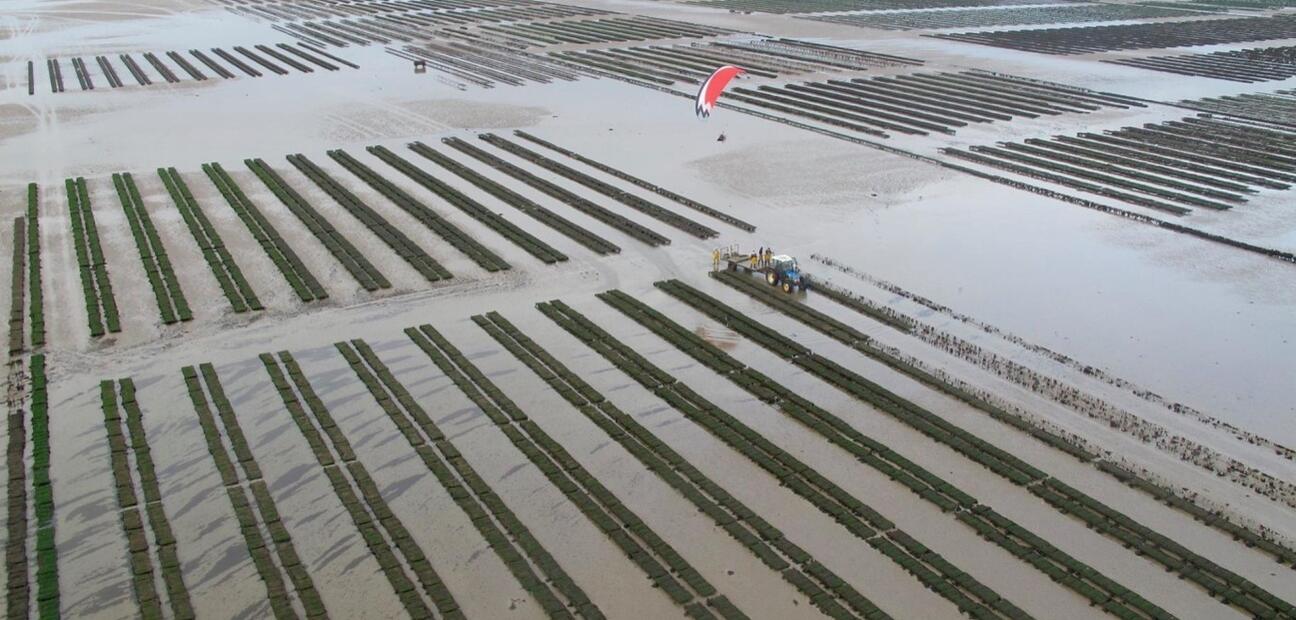
This work programme supports the sustainable development of Ireland’s aquaculture sector while ensuring the protection of marine biodiversity within Natura 2000 sites. It integrates Appropriate Assessment (AA), ecological monitoring, targeted research, and scientific expertise to inform evidence-based licensing and management of aquaculture activities in Special Protection Areas (SPAs) and Special Areas of Conservation (SACs).
Aquaculture is a key economic activity in Ireland’s coastal regions, with a significant proportion occurring within or near Natura 2000 sites. These sites support important habitats and species, including internationally significant populations of overwintering birds and sensitive benthic ecosystems.
Under Article 6 of the Habitats Directive, aquaculture activities must undergo Appropriate Assessment to determine whether they are likely to have significant effects on designated conservation features before licences can be granted.
The programme delivers an integrated approach with four core objectives:
- Appropriate Assessment (AA) of aquaculture in SPAs
- Appropriate Assessment (AA) of aquaculture in SACs
- Monitoring and evaluation of mitigation measures
- Provision of scientific expertise and advisory services
These are supported by targeted ecological monitoring and research, ensuring a robust scientific basis for aquaculture licensing and management decisions.
Key Work Areas
1. Appropriate Assessment (SPAs and SACs)
- Preparation of AA reports and screening assessments
- Evaluation of impacts on bird species (SPAs) and habitats/species (SACs)
- Support for aquaculture licensing decisions in Natura 2000 sites
2. Benthic Surveys
Benthic surveys are carried out to monitor and understand how aquaculture activities influence the seabed and associated biological communities. They help identify changes arising from aquaculture activities, such as nutrient enrichment or habitat disturbance, and provide early warning of environmental impacts. This supports sustainable management, ensuring the long-term ecological integrity of marine habitats.
3. Bird Monitoring (SPAs)
Low tide bird surveys are conducted within SPAs where aquaculture is present to monitor wintering waterbird populations. This work is critical for understanding how aquaculture activities interact with bird populations and for ensuring effective conservation management.
4. Monitoring of Mitigation Measures
The work evaluates the effectiveness of mitigation measures implemented through aquaculture licensing such as spatial reconfiguration or activity restrictions. Monitoring focuses on key Natura 2000 sites (e.g. Dungarvan Harbour, Bannow Bay, Shannon Estuary, Castlemaine Harbour), using low-tide bird surveys, behavioural observations and environmental data collection. This ensures that mitigation measures are evidence-based and effective in reducing environmental pressures.
5. Bird Research and Modelling
Targeted research is undertaken to better understand the ecology of overwintering waterbirds and their interactions with aquaculture.
- Satellite Tagging Studies
Satellite tags have been deployed on Bar-tailed and Black-tailed Godwits to track movements across Irish coastal wetlands in Autumn/Winter 2025 to provide insight into site fidelity and foraging range - Individual-Base Modelling (IBM)
IBMs are being developed for Dungarvan Bay and Bannow Bay SPAs. These models allow assessment of how aquaculture-related changes (e.g. disturbance, prey availability, habitat access) may affect bird populations and help inform sustainable management decisions.
Expected Benefits
- Protection of Natura 2000 habitats and species
- Sustainable development of Ireland’s aquaculture sector
- Improved integration of science into policy and licensing
- Strengthened ecological monitoring across multiple sites
- Enhanced advisory and research capacity
This project ensures that aquaculture activities are planned and managed in a way that protects biodiversity while supporting coastal economies and long-term ecosystem health.
This is a multiannual programme running from 2022 to 2027
Key Outputs
- Appropriate Assessment reports (SPAs and SACs)
- Benthic survey datasets and analyses
- Bird monitoring datasets and reports
- Evaluation of mitigation measures
- Scientific research outputs and models
- Advisory reports to DAFM to support aquaculture licensing decisions in Natura 2000 sites